Feast day: December 24
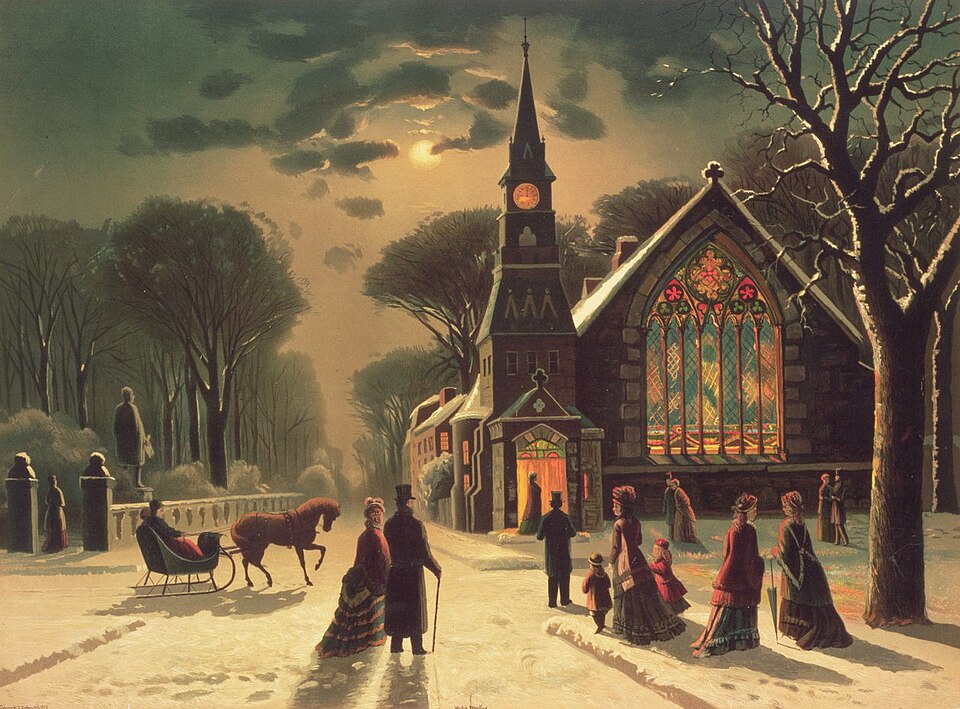
Christmas Eve
The vigil of Christmas, the long Advent waiting drawing to its close — the night the Church keeps watch for the dawn of the Savior's birth, remembering all the ancestors who longed for his coming.
Christmas Eve, December 24, is the vigil of the Nativity of the Lord — the threshold of the great feast, when the long expectation of Advent reaches its final hours and the Church keeps watch through the night for the dawn of the Savior's birth. It is a day poised between waiting and fulfillment, heavy with a sense of approaching joy.
In the older calendars, this day was kept as the feast of the first parents, Adam and Eve — for the child born this night comes, the Church believes, to undo the fall that began with them and to open again the gates of paradise that their sin had closed. From this ancient commemoration came the custom of the 'paradise tree,' hung with apples, an ancestor of the modern Christmas tree that now stands in countless homes.
As night falls, the waiting gives way to celebration. By long and beloved tradition the feast of Christmas is begun at midnight, with the first Mass of the Nativity — the 'Mass of the Angels' — recalling the hour when, the Gospel says, the Savior was born in the silence of the night and the angels appeared to the shepherds with their song of glory. Around the world the bells ring out and the faithful gather in the darkness to greet the newborn King.
The eve is filled with the customs that families hold most dear — the lighting of candles and trees, the setting of the crib, the gathering of households, songs and feasting and the giving of gifts — all of them ways of keeping vigil for the coming of the Light into the world. Christmas Eve is the hinge on which the whole season turns, the holy night when, the Church proclaims, heaven came down to earth.
The old calendars kept this day as the feast of Adam and Eve, our first parents — for the child born tonight comes to undo the fall that began with them.
Image: J. Hoover & Son (Public domain), via Wikimedia Commons.
Source: newadvent.org/cathen/03724b.htm
Get a story like this every Sunday.
← St. John of Kanty · All saints · The Nativity of the Lord →