Feast day: March 1
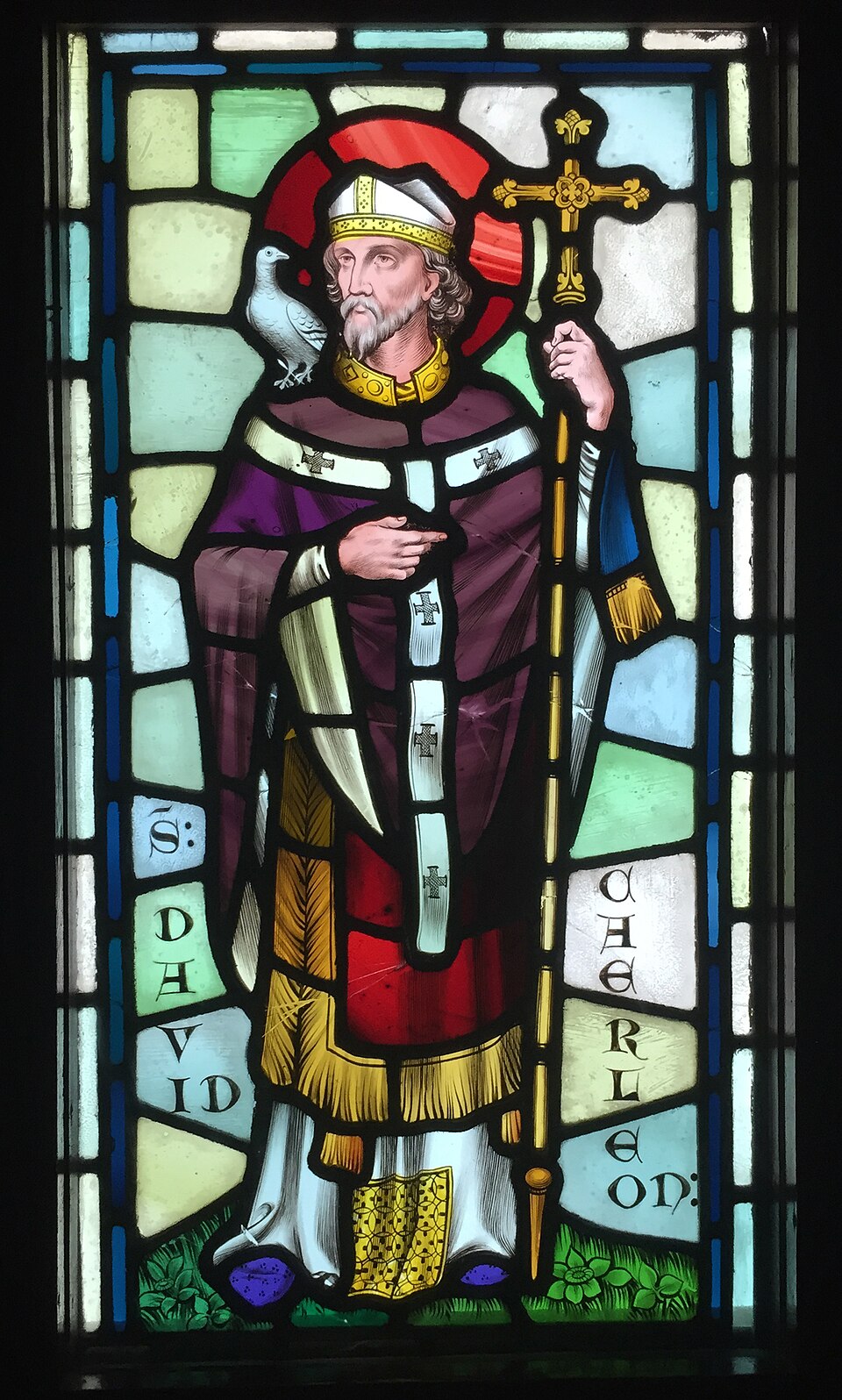
St. David of Wales
The patron saint of Wales, who founded a strict monastery where monks pulled the plough by hand and drank only water, earning him the name 'the Waterman.'
David — Dewi in his own Welsh tongue — lived in the sixth century and is the patron saint of Wales, the only one of the patron saints of the British nations to be a native of the land he protects. By tradition of royal descent, he became a monk and then a bishop, founding his chief monastery at Menevia, on the wild western coast of Pembrokeshire, at the place that still bears his name, St. David's.
His monasticism was famously severe. His monks were to imitate the monks of Egypt, drinking only water — which earned David the name 'the Waterman' — eating only bread with herbs, owning nothing, and laboring with their own hands at the plough, which they pulled themselves without the help of oxen, joining hard manual work to constant prayer and silence.
He came to prominence at the Synod of Brefi, where, the tradition says, he preached so powerfully against a reviving heresy that the ground rose into a little hill beneath him so that all could hear, while a white dove settled on his shoulder — which is why he is often pictured standing on a mound with a dove. He was acclaimed there as the leading bishop of his people.
His reputed last words to his community have become a kind of motto for the Welsh: 'Be joyful, keep the faith, and do the little things that you have seen and heard from me.' He died, by tradition on March 1, the day kept as his feast and as the national day of Wales, when the Welsh wear a leek or a daffodil in his honor.
His monks drank no wine, ate no meat, and ploughed without oxen — yet his rule produced a network of monasteries across Wales and the West.
“Be joyful, keep the faith, and do the little things you have seen and heard from me.”
— St. David of Wales
Image: Hchc2009 (CC BY-SA 4.0), via Wikimedia Commons.
Source: newadvent.org/cathen/04640b.htm
Get a story like this every Sunday.