Feast day: July 13
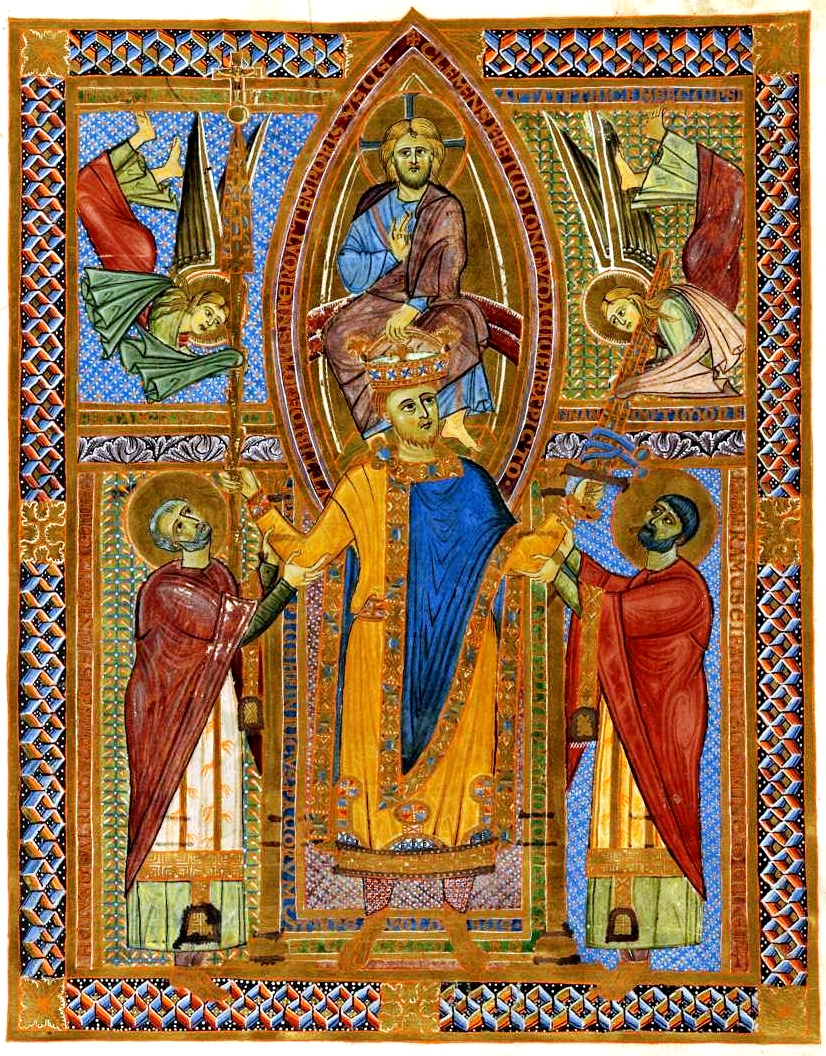
St. Henry II
A Holy Roman Emperor who governed his vast realm as a Christian duty, founded the diocese of Bamberg, supported monastic reform, and ruled with his wife St. Cunigunde.
Henry II was the last emperor of the Saxon line, born in 972 and raised — significantly — under the guidance of St. Wolfgang of Regensburg, who gave him a deep and lasting piety. He became Duke of Bavaria, then King of Germany in 1002, and was crowned Holy Roman Emperor by the pope in 1014.
Unusually among medieval rulers, Henry saw his imperial power as a means of serving the Church. He worked tirelessly for the reform of monasteries and the discipline of the clergy, supported the renewal movement spreading from Cluny, and used his authority to promote able and holy bishops — though always, too, with a keen eye to the good order of his realm.
His marriage to St. Cunigunde was famously devout, and because the couple had no children, a later tradition held that they had lived in perpetual continence by mutual vow — the origin of Henry's patronage of the childless, though the story is uncertain. What is sure is that, having no heir, Henry made the Church the great beneficiary of his devotion, founding and richly endowing the new bishopric and cathedral of Bamberg, his most cherished creation.
He died in 1024 and was canonized in 1146 — the only German king or emperor to be made a saint. His wife Cunigunde was canonized after him, making them one of the few married couples both honoured as saints.
The only German king ever canonized, he is honored not for conquest but for ruling justly, reforming the Church, and his childless, prayerful marriage.
Image: anonymous (Public domain), via Wikimedia Commons.
Source: newadvent.org/cathen/07227a.htm
Get a story like this every Sunday.
← Sts. Louis & Zélie Martin · All saints · St. Kateri Tekakwitha →