Feast day: April 8
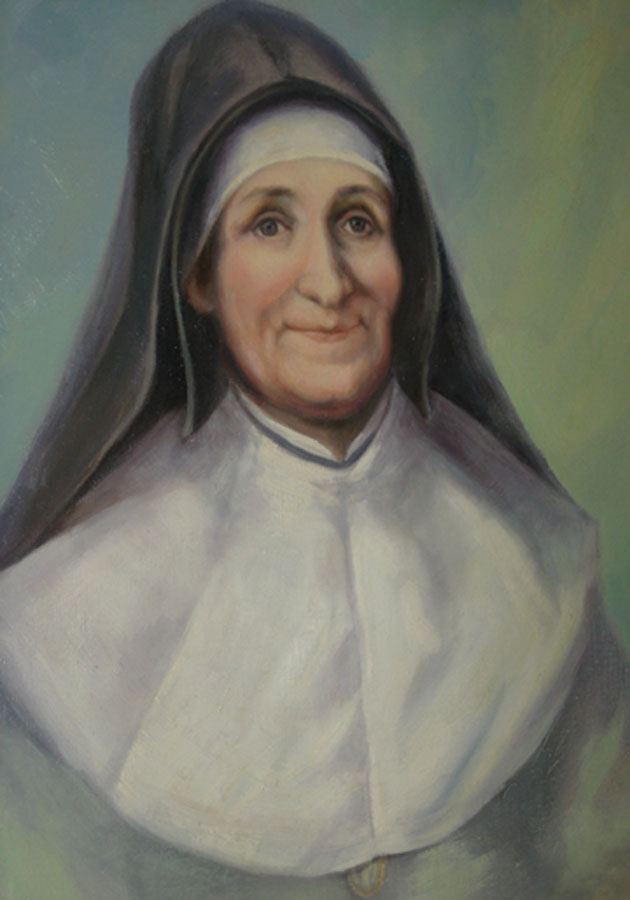
St. Julie Billiart
A French peasant woman paralyzed for over twenty years who, even bedridden, taught the faith and founded the Sisters of Notre Dame de Namur to educate poor girls.
Marie-Rose Julie Billiart was born in 1751 in a village of Picardy in France, the daughter of farmers. Pious and capable from childhood, she taught catechism to the village children; but in her early twenties a shock — a gunshot fired at her father as she sat beside him — brought on a mysterious paralysis that left her, for some twenty-two years, unable to walk and often unable to speak.
From her sickbed she became a centre of prayer and counsel. During the French Revolution, which hunted loyal priests, the paralyzed Julie hid fugitive clergy and was herself forced to flee for her life more than once, carried from place to place. Out of these dangerous years grew her resolve, with the noblewoman Françoise Blin de Bourdon, to found a congregation for the Christian education of poor girls.
In 1804, during a parish mission, a priest bade her in the name of God to take a step — and she rose, instantly and permanently cured after more than two decades of paralysis. Free at last to move, she threw herself into building her new community, the Sisters of Notre Dame de Namur, travelling tirelessly to open schools.
She founded some fifteen convents and schools before her death in 1816, despite constant opposition and ill health. Her favourite saying, 'How good is the good God,' summed up a life of irrepressible trust. She was canonized in 1969.
She was paralyzed and largely mute for decades, yet ran a hidden catechism school from her bed — and was cured the year she founded her teaching order.
“How good is the good God!”
— St. Julie Billiart
Image: artist unknow (Public domain), via Wikimedia Commons.
Source: newadvent.org/cathen/08559a.htm
Get a story like this every Sunday.