Feast day: September 6
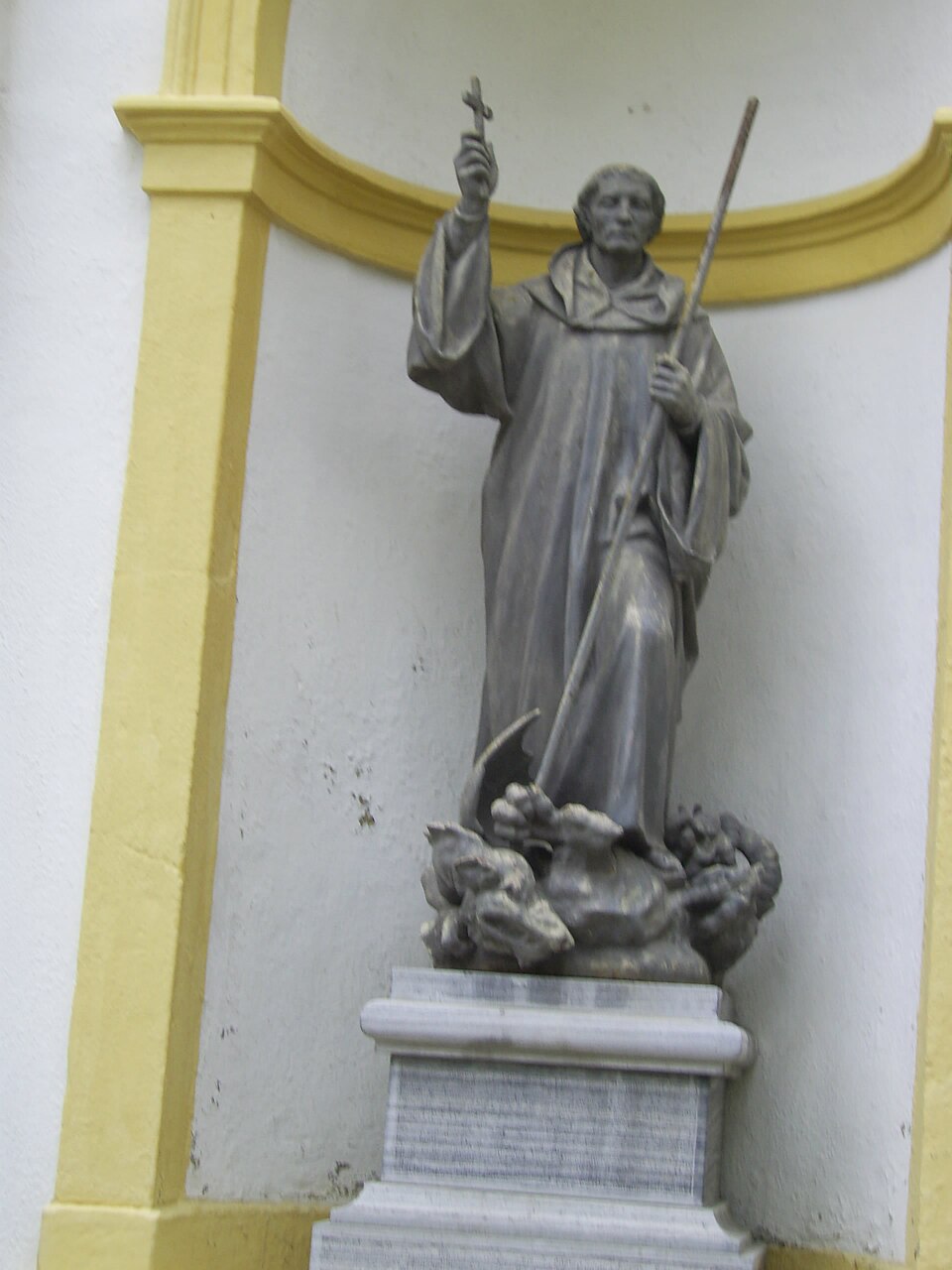
St. Magnus of Füssen
A monk who carried the faith into the wild Allgäu region of the Alps, clearing forests, founding the abbey of Füssen, and becoming the great local saint of the high country.
Magnus — also called Magnoald or, affectionately, Mang — was an eighth-century missionary monk honoured as the 'Apostle of the Allgäu,' the Alpine region where Bavaria, Swabia, and the Tyrol meet. According to tradition he belonged to the circle of the great Irish missionaries around St. Gall, and was sent to carry the Gospel into the still wild and half-pagan mountain valleys of the upper Lech.
He settled at Füssen, in the high country of southern Germany, where he founded a monastery, cleared the forest, and laboured among the scattered mountain people, preaching, baptizing, and teaching them to till the land. His monastery became the seed of the town that grew up around it.
Many legends attached to him reflect the hard, half-tamed world he worked in: he is said to have driven out the serpents, bears, and vermin that plagued the region's fields and herds, and to have protected the people from the violent Alpine storms. From these stories he became the patron invoked against snakes, pests, and bad weather — the protector of crops and cattle.
He died at Füssen about 750, and his shrine there became a place of pilgrimage. Magnus remains one of the most beloved local patrons of the Allgäu and the Bavarian-Swabian Alps.
Country folk of the Alps long invoked him against vermin, pests, and storms that threatened the harvest — the 'Apostle of the Allgäu.'
Image: artist unknown (unknown), via Wikimedia Commons.
Source: newadvent.org/cathen/09536a.htm
Get a story like this every Sunday.