Feast day: September 24
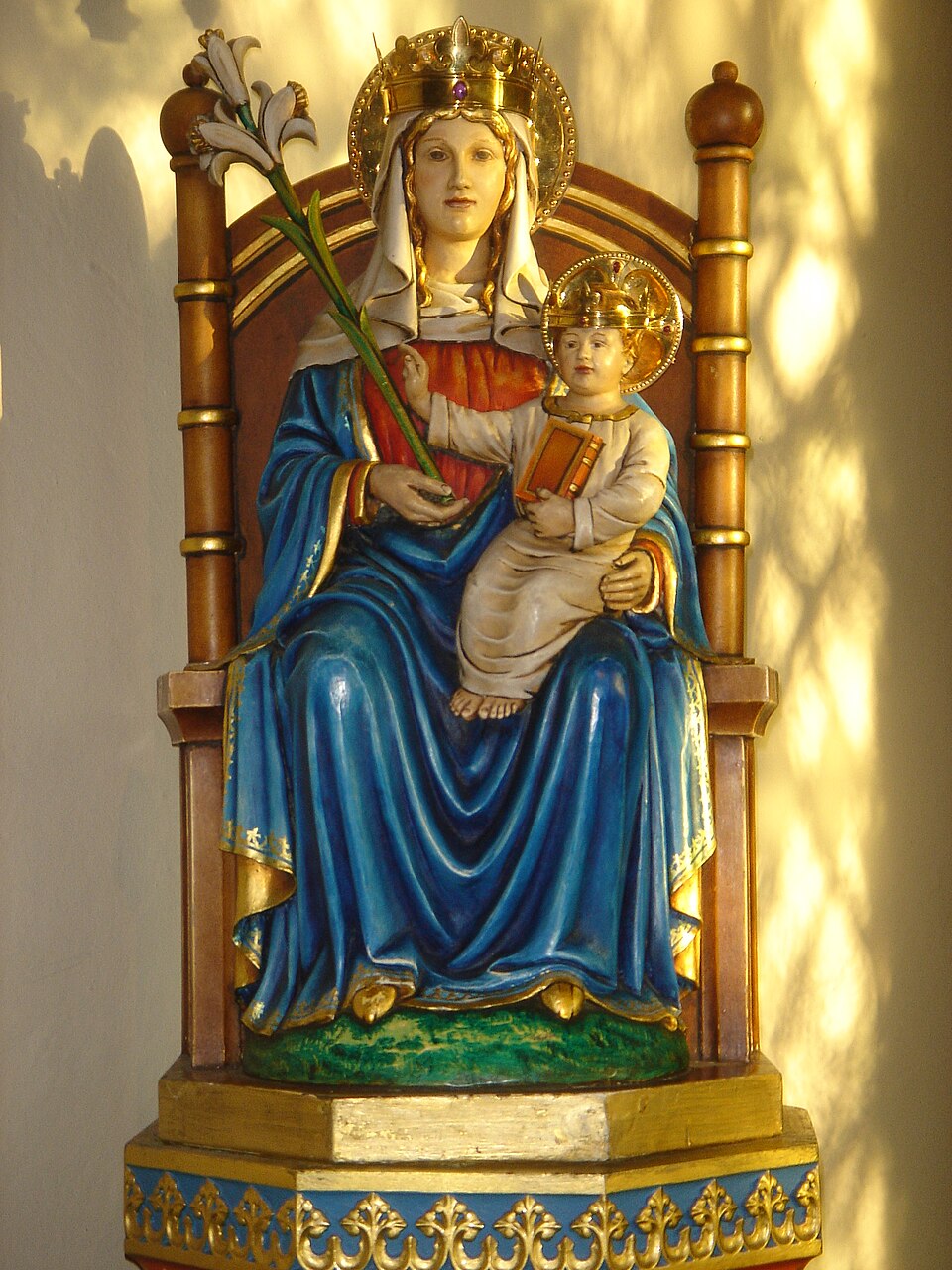
Our Lady of Walsingham
A title of Mary tied to the medieval English shrine at Walsingham, built after a noblewoman's vision to recall the house of Nazareth, and once one of Europe's great pilgrimages.
Our Lady of Walsingham is the title under which Mary was venerated at one of the greatest pilgrimage shrines of medieval England, in the village of Walsingham in Norfolk — a place so dear to English devotion that it was called 'England's Nazareth.' The shrine took as its very heart the home of the Holy Family, the house where Mary received the angel and where the Word was made flesh.
By the tradition, in the year 1061, a devout English noblewoman named Richeldis de Faverches was granted a vision in which Mary showed her the house of the Annunciation at Nazareth and asked her to build a replica of it at Walsingham, that the English might make there a pilgrimage to honor the mysteries of the Incarnation without crossing the seas to the Holy Land. The 'Holy House' was built, and around it grew a great shrine.
For nearly five centuries Walsingham drew pilgrims from every rank of English society, including kings who came, some of them, walking the last mile barefoot in devotion. It was among the most famous and beloved places of prayer in the country, a sign of England's deep love for the Mother of God.
The shrine was destroyed and its image burned in the upheavals of the Reformation in the sixteenth century, and for centuries Walsingham lay in ruins. But in modern times the pilgrimage was restored, and Walsingham is once again a place of prayer; Our Lady of Walsingham is honored on September 24 and venerated as a patroness of England and a focus of prayer for the unity of Christians and the renewal of the faith in the land.
Called 'England's Nazareth,' the shrine drew kings on pilgrimage for five centuries until it was destroyed at the Reformation — and was restored in modern times.
Image: Thorvaldsson (CC BY 3.0), via Wikimedia Commons.
Source: newadvent.org/cathen/15543a.htm
Get a story like this every Sunday.
← St. Pio of Pietrelcina (Padre Pio) · All saints · St. Sergius of Radonezh →