Feast day: May 22
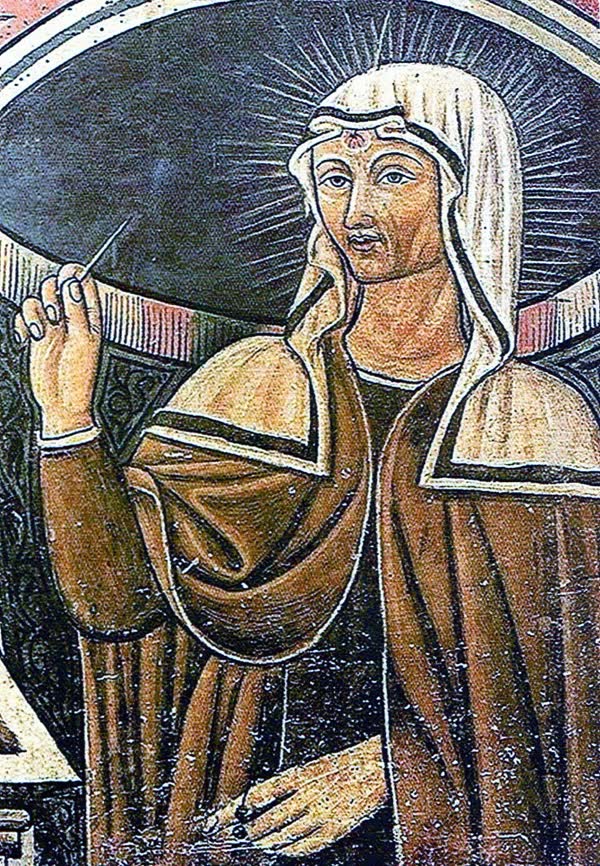
St. Rita of Cascia
Forced into marriage with a violent man, she converted him by patience, lost him and both sons, and finally entered the convent she'd longed for since girlhood.
Rita was born about 1381 near Cascia in Italy and longed from girlhood to become a nun, but in obedience to her parents she was given in marriage, by tradition at about twelve, to a harsh and violent husband. For eighteen years she bore his cruelty with patience and gentleness, raising their two sons, and at last won her husband to a better life — only for him to be murdered in one of the bitter feuds of the time.
When her sons resolved to avenge their father's death, Rita, dreading that they would damn their souls by murder, prayed that God would take them rather than let them become killers; both fell ill and died, reconciled to God, before they could carry out the revenge. Widowed and childless, she turned again to the desire of her youth.
She sought to enter the Augustinian convent at Cascia but was refused, partly because of the feud that clung to her family. Only after she had worked to reconcile the warring parties was she at last admitted, and there she spent some forty years in prayer, penance, and humble service. Late in life, while praying before a crucifix, she received a wound on her forehead as though from a thorn of Christ's crown, which remained with her until her death.
She died at Cascia about 1457, and her body is venerated there still. Because of the impossible situations of her life — a forced marriage endured, a husband converted, sons saved from sin, a convent door finally opened — she became known as the saint of the impossible, invoked the world over in desperate and hopeless cases. She was canonized in 1900.
She's the 'saint of the impossible' — every door in her life closed, and every one eventually opened.
Image: Roscini Claudio (Public domain), via Wikimedia Commons.
Source: newadvent.org/cathen/13064a.htm
Get a story like this every Sunday.
← Sts. Christopher Magallanes & Companions · All saints · St. John Baptist de Rossi →