Feast day: February 14
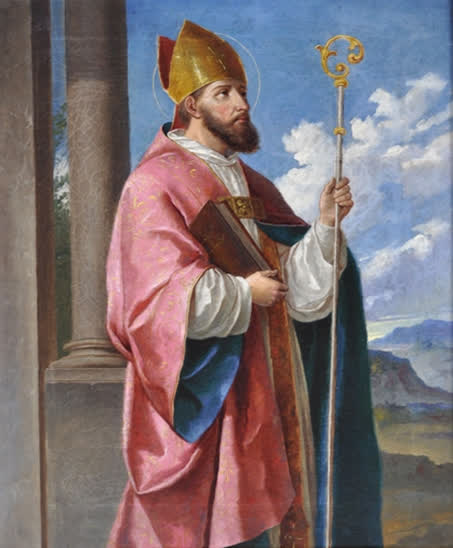
St. Valentine
Roman priest martyred under Claudius II, by tradition for secretly witnessing Christian marriages for soldiers forbidden to wed.
For all the fame of his day, remarkably little can be known with certainty about St. Valentine himself. The early martyrologies list at least two, perhaps three, martyrs of the name under February 14 — one a priest of Rome, another a bishop of Interamna (modern Terni), both said to have suffered in the persecutions of the third century and to have been buried along the Flaminian Way outside Rome — and it is no longer possible to disentangle their stories.
What the tradition holds is that Valentine was a Christian put to death for his faith, and that a basilica was raised in his honor in Rome at an early date, a sign that his cult was ancient and genuine. The later legends — that he secretly married Christian couples against an imperial ban, or that he healed his jailer's blind daughter and signed a farewell note 'from your Valentine' — are charming but cannot be verified, and grew up long after his death.
The association of the day with romantic love has nothing to do with the martyr and everything to do with the calendar and the birds. In the Middle Ages it was widely believed in England and France that the birds began to choose their mates on February 14, halfway through the second month of the year, and so the day became, in the poetry of Chaucer and his contemporaries, the day of lovers and of love-letters.
Because so little is historically certain about him, St. Valentine was removed from the Church's universal calendar in 1969, though he is still honored locally and remembered the world over. Behind the cards and flowers stands a real and shadowy figure — a man who, whatever else is uncertain, gave his life for Christ.
The real Valentine was beheaded for marrying couples illegally. The greeting-card holiday hides a story of a priest who died for marriage.
Image: Matija Bradaška (Public domain), via Wikimedia Commons.
Source: newadvent.org/cathen/15254a.htm
Get a story like this every Sunday.
← Sts. Cyril & Methodius · All saints · St. Claude de la Colombière →