Feast day: October 31
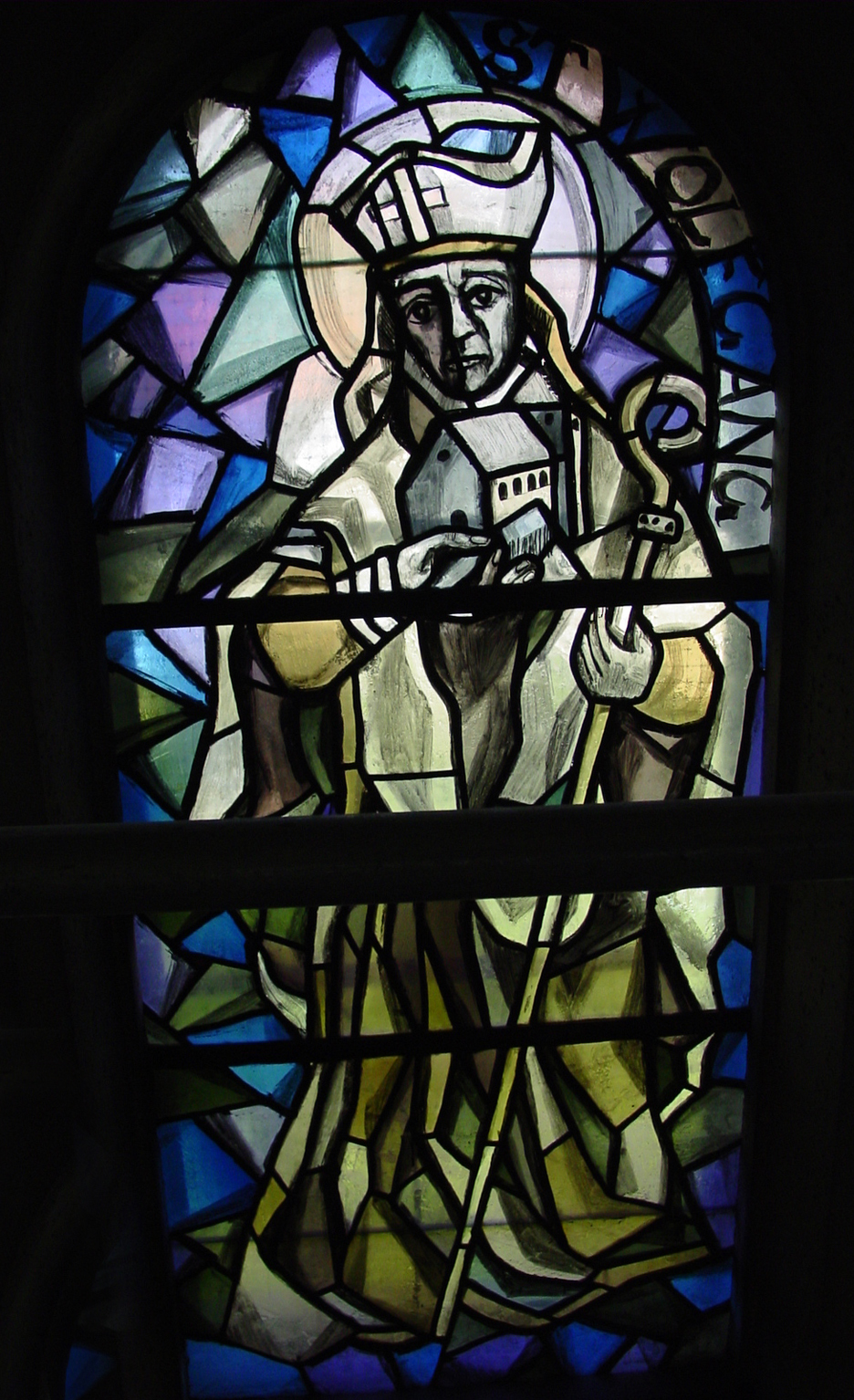
St. Wolfgang of Regensburg
A teacher and reforming bishop of Regensburg, tutor to the future Emperor Henry II, who renewed the monasteries, served the poor, and slipped away at times to live as a hermit.
Wolfgang was one of the leading churchmen of tenth-century Germany, a bishop, monk, and reformer who helped shape the Church of Bavaria. Born about 934 of a noble Swabian family, he was educated at the famous abbey school of Reichenau and became a teacher, first at Reichenau and then at the cathedral school of Trier, where he worked for the reform of the clergy.
Drawn to a deeper religious life, he gave up his position to become a Benedictine monk at the great Swiss abbey of Einsiedeln, was ordained a priest, and for a time went as a missionary among the still partly pagan Magyars of Hungary. In 972 he was called, against his wish, to become bishop of Regensburg.
As bishop he proved an outstanding pastor and reformer. He restored the discipline of the monasteries of his diocese — notably the ancient abbey of St. Emmeram, to which he gave back its own abbots — reformed convents, cared diligently for the education of his clergy and the people, and was known for his austerity and his generosity to the poor. He was even, for a time, tutor to the future emperor St. Henry II.
Famous in his lifetime for holiness, he died in 994 while travelling, and was canonized in 1052. He became one of the most popular saints of Bavaria and Austria, around whom many picturesque legends gathered.
One of the great bishops of his age, he taught a future emperor-saint and was so loved that pilgrims sought his lakeside hermitage for centuries after.
Image: No machine-readable author provided. JJFox~commonswiki assumed (based on copyright claims). (Public domain), via Wikimedia Commons.
Source: newadvent.org/cathen/15682b.htm
Get a story like this every Sunday.