Feast day: February 22
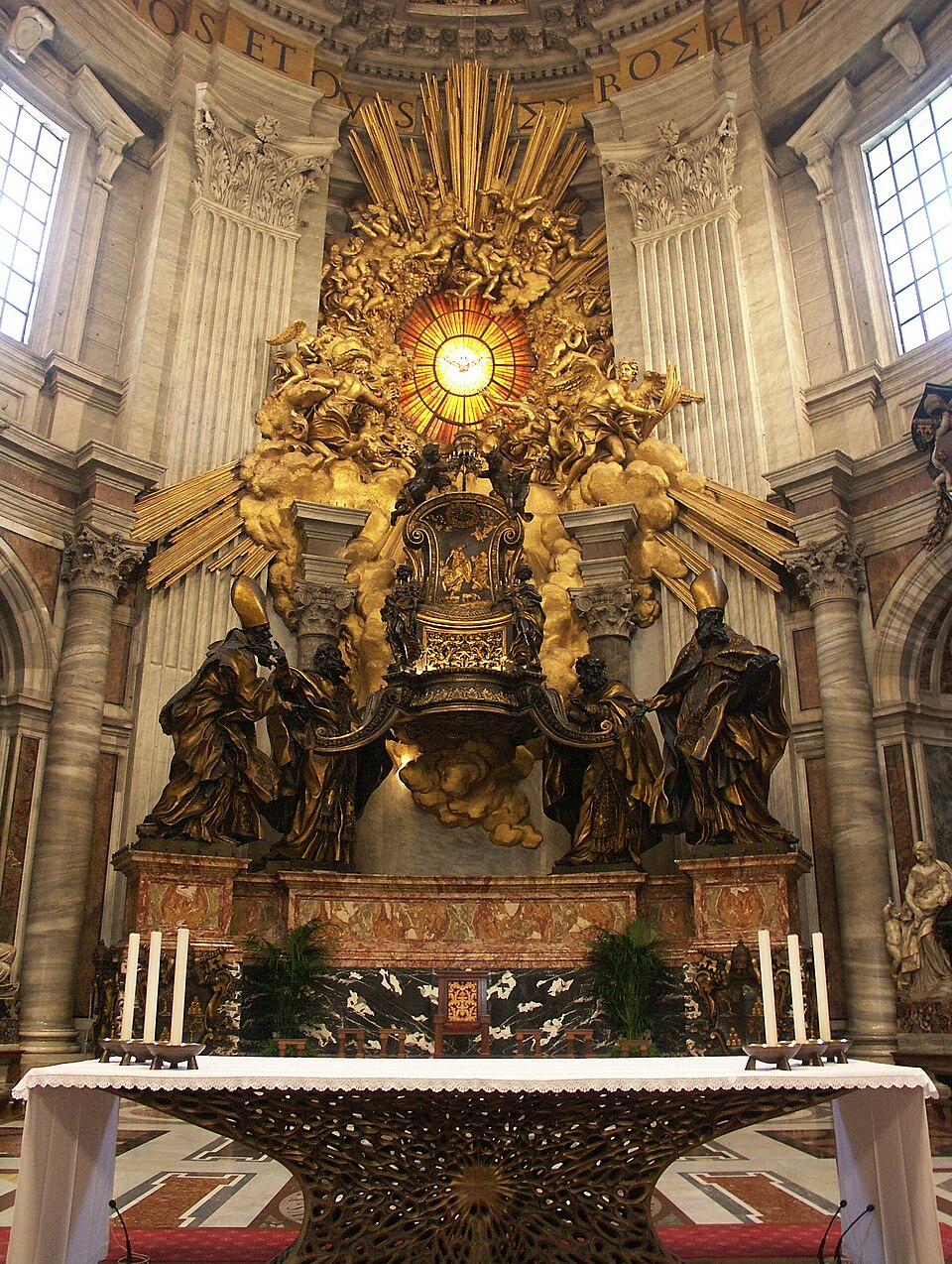
The Chair of St. Peter
A feast not of a relic but of an office — the teaching authority Christ gave to Peter and his successors, the visible point of unity for the worldwide Church.
The feast of the Chair of St. Peter, kept on February 22, honors not a piece of furniture but what it stands for: the teaching authority and office that Christ entrusted to Peter and, through him, to those who succeed him as bishop of Rome. In the ancient world a 'chair' — in Latin, 'cathedra' — was the seat from which a teacher or a magistrate spoke with authority, and from it the very word 'cathedral,' the church that holds a bishop's chair, derives.
From the earliest centuries the Church at Rome kept a feast commemorating the day Peter first took his seat as its shepherd and teacher. It celebrates the conviction, expressed by the Fathers, that the see of Peter is the visible center and touchstone of the Church's unity — the chair around which the scattered flock of Christ is gathered into one.
An actual ancient chair, venerated as connected with the apostle, has long been preserved at Rome, encased in the great bronze monument by Bernini in the apse of St. Peter's Basilica, beneath the radiant window of the dove of the Holy Spirit. But the feast looks past the relic to the reality it signifies.
For the Church, this day is a celebration of the gift of unity and of the office Christ established when he said to Peter, 'You are Peter, and on this rock I will build my Church.' It honors the unbroken line of those who have sat in Peter's place, and the role of that chair as a sign and servant of the communion of all the faithful throughout the world.
The 'chair' (cathedra) is a symbol of teaching authority; today the Church celebrates the unity and continuity of the office Christ entrusted to Peter.
Image: Dnalor 01 (CC BY-SA 3.0), via Wikimedia Commons.
Source: newadvent.org/cathen/03551e.htm
Get a story like this every Sunday.