Feast day: February 23
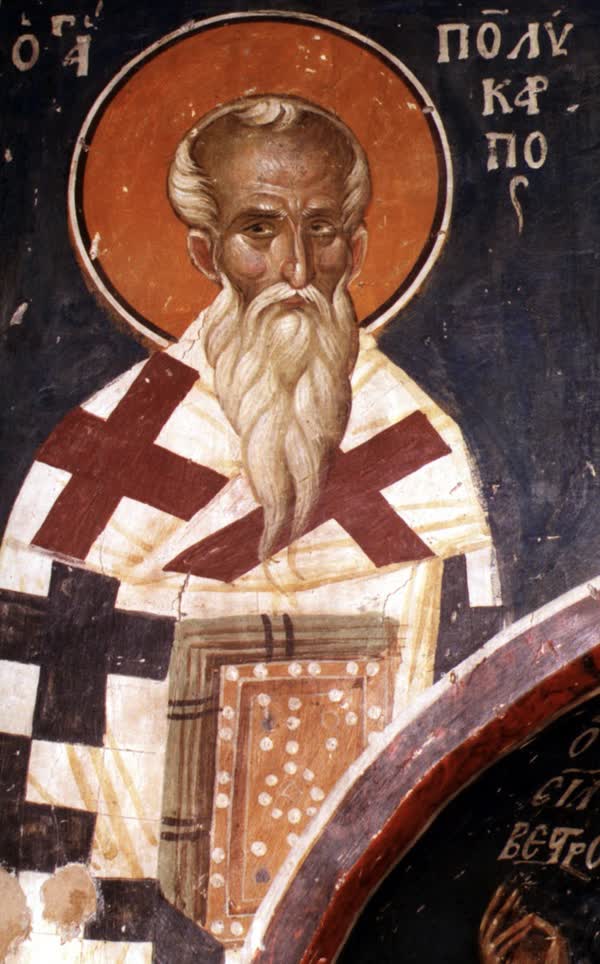
St. Polycarp
Bishop of Smyrna and disciple of the Apostle John, burned at the stake at age 86 — a living link between the apostles and the early Church.
Polycarp was bishop of Smyrna in Asia Minor and one of the great links between the apostles and the later Church. He had, the early writers tell us, been instructed by the apostles themselves and had conversed with many who had seen the Lord; St. Irenaeus, who heard Polycarp preach as a boy, recalled how the old bishop would tell of his conversations with the apostle John. Through Polycarp the living memory of the apostolic age was handed on.
Already very old, he traveled to Rome to confer with the pope over the date of Easter — a sign of the esteem in which he was held — and labored all his life against the heresies beginning to trouble the Church, a steadfast 'teacher of Asia.' His one surviving letter, to the Philippians, breathes the same plain, fervent faith as the letters of his friend Ignatius.
When persecution broke out at Smyrna, the aged bishop was hunted down. Brought into the arena and ordered to curse Christ to save his life, he gave the answer that has echoed ever since: 'Eighty-six years I have served him, and he has done me no wrong. How can I blaspheme my King who saved me?'
He was condemned to be burned alive, and the eyewitness account of his death — the 'Martyrdom of Polycarp,' written by his own church about the year 155 — is the oldest detailed account of a Christian martyrdom outside the New Testament. He prayed aloud as the fire was lit, and when it would not consume him, he was stabbed with a dagger. He is honored among the Apostolic Fathers.
Asked to curse Christ and live, he answered: 'Eighty-six years I have served Him, and He never did me any wrong.'
“Eighty-six years I have served Him, and He never did me any wrong. How can I blaspheme my King who saved me?”
— St. Polycarp
Image: PravoslavnyChristianin (CC0), via Wikimedia Commons.
Source: newadvent.org/cathen/12219b.htm
Get a story like this every Sunday.
← The Chair of St. Peter · All saints · St. Ethelbert of Kent →