Feast day: December 14
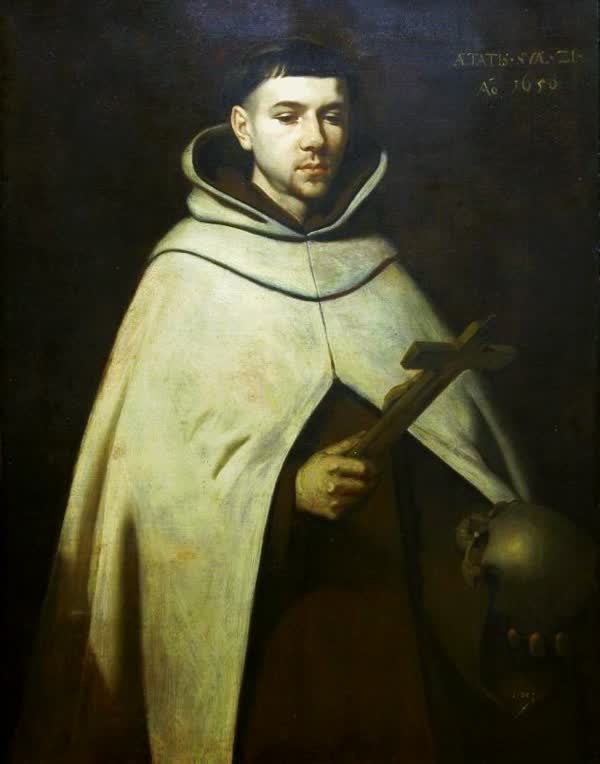
St. John of the Cross
Carmelite reformer imprisoned and beaten by his own brethren — who in that dark cell composed some of the greatest mystical poetry ever written.
John was born in 1542 at Fontiveros in Spain, into poverty made sharper by his father's early death. He worked in a hospital and studied with the Jesuits before entering the Carmelite order, and was on the point of leaving for the stricter Carthusians when he met St. Teresa of Ávila. She persuaded the young friar — small in stature but immense in soul — to join instead her reform of the Carmelites, and he became the first friar of the 'Discalced' (barefoot) reform.
The reform met fierce resistance from within the order. In 1577 John was seized by Carmelites opposed to it and shut up in a tiny, dark cell in Toledo for nine months, beaten and half-starved. Yet it was in that prison, in the dark, that he composed some of the most luminous poetry in the Spanish language, holding the verses in his memory until he could write them down after a daring escape.
Out of that experience came his great mystical writings — the 'Spiritual Canticle,' the 'Ascent of Mount Carmel,' and the 'Dark Night of the Soul' — which chart the soul's painful purification and its journey through darkness into union with God. The phrase 'the dark night of the soul' has passed into common speech, but for John it named a real and hopeful passage: God stripping the soul of everything lesser so that it can be filled with him alone.
He spent his last years in further conflict and was sent in disgrace to a remote friary, where he died in 1591, worn out and serene. Poet, mystic, and reformer, he was canonized in 1726 and declared a Doctor of the Church, honored as one of the supreme guides of the interior life.
'The Dark Night of the Soul' — the phrase everyone uses — is the title of a poem he wrote after escaping a 6-by-10-foot prison cell by knotted blankets.
“In the evening of life, we will be judged on love alone.”
— St. John of the Cross
Image: Unknown authorUnknown author (Public domain), via Wikimedia Commons.
Source: newadvent.org/cathen/08480a.htm
Get a story like this every Sunday.