Feast day: January 1
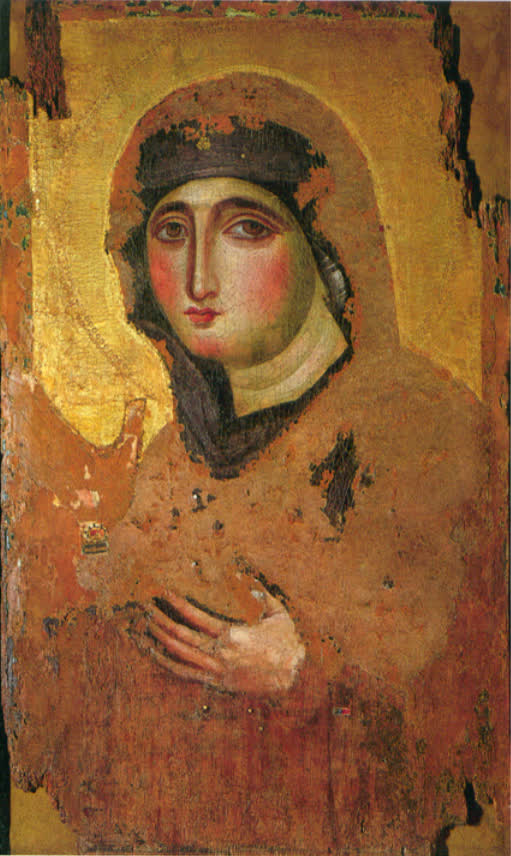
Mary, Mother of God
The Blessed Virgin Mary, mother of Jesus Christ. The Church opens every year by honoring her under her oldest title, declared at the Council of Ephesus in 431.
The Church opens each calendar year, on the octave day of Christmas, by honoring Mary under her most ancient and fundamental title: Mother of God. The Greek word is 'Theotokos' — literally 'God-bearer.' It is a statement less about Mary than about her Son, affirming that the child she bore is truly God, not merely a man whom God later filled.
The title was solemnly defined at the Council of Ephesus in 431, against those who wished to call Mary only 'Mother of Christ,' as though the divine and human in Jesus could be split apart. The bishops taught that since Jesus is one person, both God and man, the woman who bore him is rightly called the Mother of God. Tradition holds that when the definition was announced, the people of Ephesus broke into celebration and escorted the bishops home by torchlight.
To honor Mary in this way is, for the Church, to guard the heart of the faith about Christ himself: that in him God truly took flesh and was born of a woman. Everything else the Church says of Mary flows from this one truth, and so it is fittingly the first feast of the year.
In the Gospels Mary speaks little, but her few words shape the whole story — her 'yes' to the angel, her counsel at Cana ('Do whatever he tells you'), and the Magnificat. The Church remembers that after the events of Christ's birth she 'kept all these things, reflecting on them in her heart,' the model of every believer who ponders the mystery of God made man.
'Theotokos' (God-bearer) is the oldest formally defined Marian title — Christians were rioting in the streets of Ephesus in joy when it was confirmed.
“Do whatever He tells you.”
— Mary, Mother of God
Image: Asia (CC BY-SA 4.0), via Wikimedia Commons.
Source: newadvent.org/cathen/15464b.htm
Get a story like this every Sunday.