Feast day: December 31
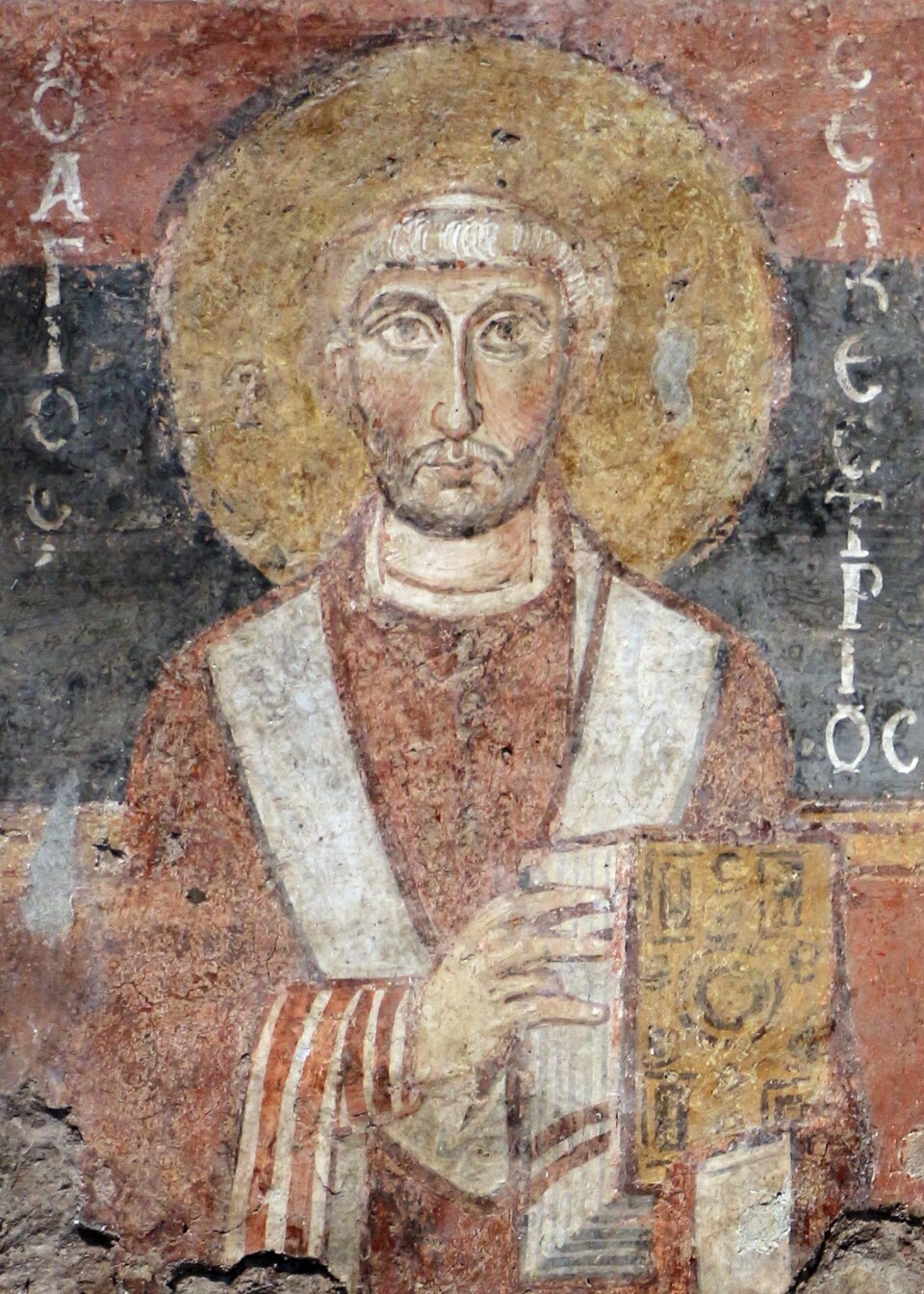
Pope St. Sylvester I
The pope through the reign of Constantine, whose years saw the Church emerge from persecution into freedom, the great basilicas of Rome rise, and the Council of Nicaea define the faith.
Sylvester I was Bishop of Rome through one of the great turning-points in the history of the Church: the reign of the emperor Constantine, who had ended the persecutions and, with the Edict of Milan in 313, given Christianity its freedom. Sylvester became pope in 314 and reigned for more than twenty years, until 335, as the Church emerged from the catacombs into the open day of imperial favour.
His was the age in which the Church first learned to live not as a hunted minority but as a public, even privileged, body — when the great Roman basilicas, the Lateran and St. Peter's, were being raised with imperial support over the holy places of the faith. Sylvester's pontificate spans this momentous transformation.
His reign also saw the first great Ecumenical Council, held at Nicaea in 325, which condemned the Arian heresy and gave the Church the Nicene Creed. Sylvester, aged and unable to attend in person, was represented by his legates, and the orthodox faith defined there had his support.
Because his quiet life coincided with such epoch-making events, later ages wove around Sylvester a mass of legend — including the famous but historically false tale that he cured and baptized Constantine and received from him great gifts and powers. The real Sylvester is more modest but no less significant: the pope who guided the Roman Church across the threshold from persecution to peace. His feast falls fittingly on the last day of the year.
He guided the Church as it stepped out of the catacombs into daylight — and in much of Europe New Year's Eve is still called simply 'Silvester' after him.
Image: User:Sailko (CC BY 3.0), via Wikimedia Commons.
Source: newadvent.org/cathen/14370a.htm
Get a story like this every Sunday.