Feast day: December 21
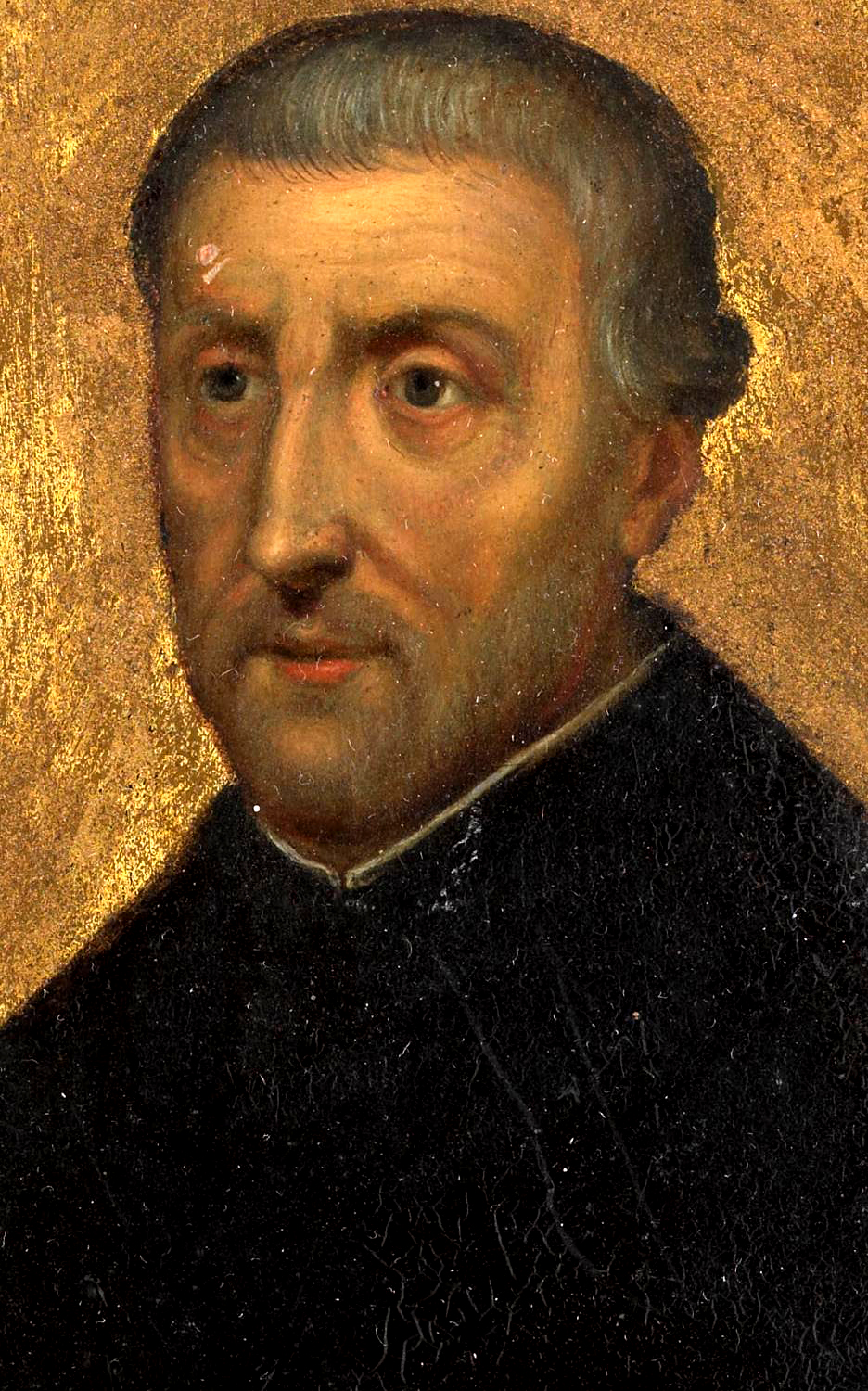
St. Peter Canisius
A Dutch Jesuit whose tireless preaching, teaching, and clear catechisms did more than any single person to renew the Catholic faith in Germany after the Reformation.
Peter Canisius was born in 1521 in the Netherlands and, as a young man studying in Germany, became one of the first to join the new Society of Jesus founded by St. Ignatius. He came of age just as the Reformation was sweeping the German-speaking lands, where the Catholic faith was collapsing in confusion, ignorance, and neglect — and he devoted his enormous energy to its renewal.
For decades he crisscrossed Germany, Austria, Bohemia, and Switzerland, teaching in universities, preaching in cathedrals, founding colleges, advising bishops and princes, and tirelessly strengthening what remained of the Catholic Church there. So central was he to its revival that he is honored, with St. Boniface, as a 'second Apostle of Germany.'
His most far-reaching work was a catechism. Convinced that the faith was being lost largely through plain ignorance of it, he wrote a clear, calm, and thorough explanation of Catholic teaching in three versions, for scholars, for students, and for children. It was reprinted hundreds of times over the following centuries, and to 'know one's Canisius' became, in German lands, simply another way of saying that one knew the faith.
For all his public labors he was a man of deep prayer and gentleness, who urged that the faith be defended with charity and never with bitterness. He died at Fribourg in Switzerland in 1597, and was at once canonized and declared a Doctor of the Church together in 1925.
His catechism was reprinted hundreds of times and taught the faith to German-speaking Catholics for three centuries — to 'know one's Canisius' meant to know the faith.
Image: AnonymousUnknown author (Public domain), via Wikimedia Commons.
Source: newadvent.org/cathen/11756c.htm
Get a story like this every Sunday.
← St. Dominic of Silos · All saints · St. Chaeremon & the Martyrs of Egypt →